Happiness through Integration with Nature
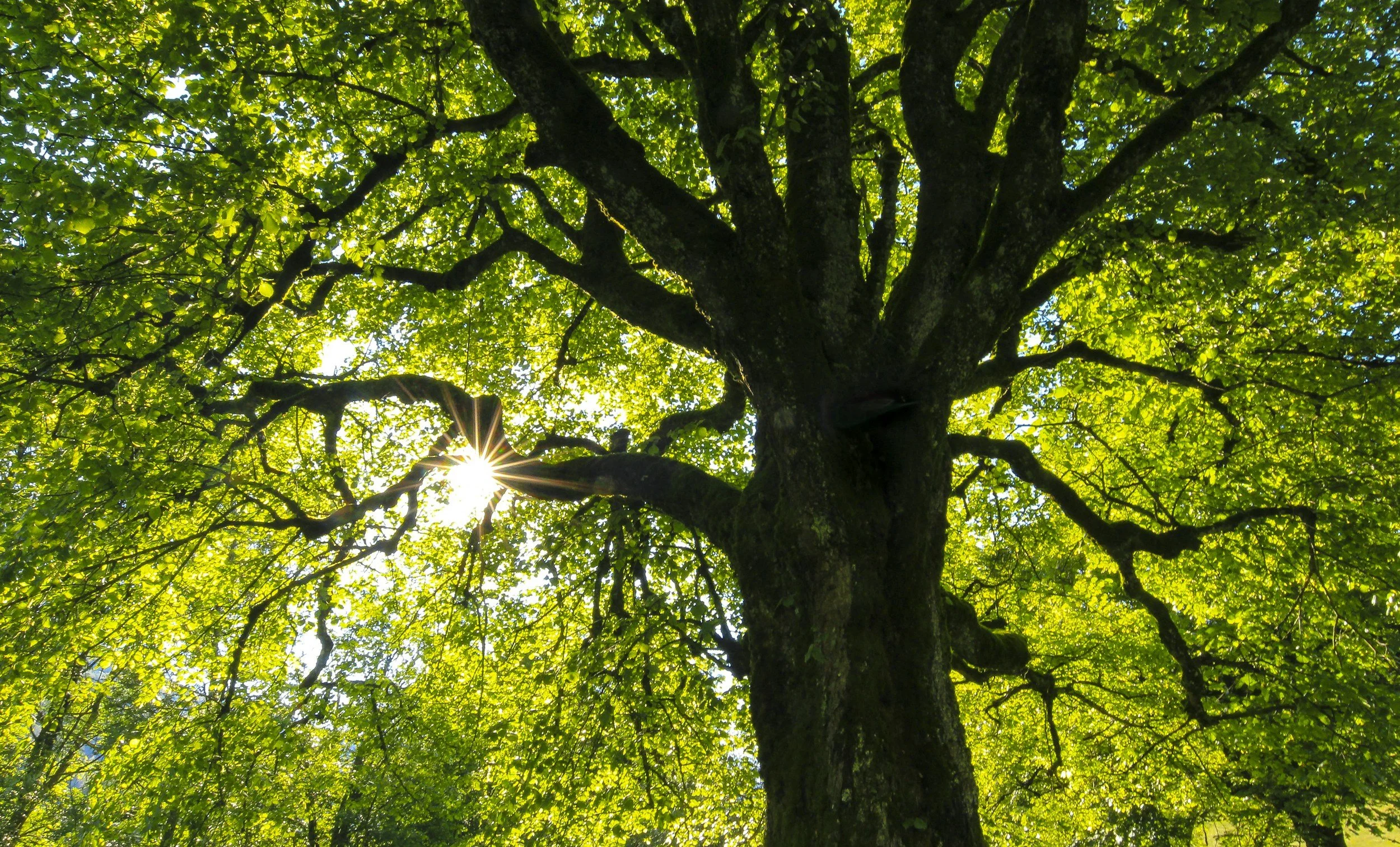
Roly Stimson (reflecting on the book “The Dao of Complexity” by Jean Boulton) [1]
Who would have thought that some ancient texts dating back to 4th Century BCE China could resonate so strongly with cutting-edge scientific thinking about “complex open systems”, and that together these could deeply reshape our attitudes and behaviours towards the natural world?
I have always believed that for us as a species to find a way to live peaceably and sustainably within the natural world, what is needed is not a techno-fix here and a (perceived) economic compromise there, but a fundamental shift in our “worldview” or “moral perspective”. And part of this shift has to involve passionate engagement not primarily with abstract concepts, like species and ecosystems, but with each and every individual unique creature whose paths we have the privilege to cross each and every day. The good news is that nothing could be more natural than remembering who we really are and what we really need.
A Price on Nature’s Head
Some ecologists try and make the case for nature conservation based on human-centred value arguments. After all, we all know that life gets rapidly worse when we deplete and degrade the natural “resources” on which we all depend for our lives, our livelihoods and our quality of life – water, air, food. But what when those that don’t fundamentally care about nature succeed in each and every situation in making a “value case” for eco-destruction: “felling the rainforest creates jobs for local farmers”, “transitioning from fossil fuel is like a tax on hard-working families”?
Complex Systems All
Complexity theory shows us that we are fundamentally similar to all other living creatures, and indeed to ecosystems, the planetary biosphere, and even human societies and organisations, in that we are all complex, open systems. As such, we all share three fundamental traits:
1. Openness – to survive and thrive we need to be open to our environments – not only ingesting and inhaling, but constantly sensing and responding sensually, emotionally, intellectually, spiritually …
2. Diversity – we are all made up of myriad diverse parts, constantly interacting, and without this dynamic and evolving diversity we, like forests and human societies, atrophy and collapse
3. Interdependence – no human is an island: without all that surrounds us, including both human society and the natural environment, we would last about as long as Elon Musk would on Mars (i.e. no time at all). Even to talk about our “environment” artificially separates us from the nature that we arise from and remain an integral part of.
Going with the flow
What Daoism teaches us about thriving in such a complex, open, diverse, dynamic and interdependent world, is that we need to use all our faculties to sense the greater flow that we are part of, and to move with it, following, not disrupting, the energy flows within it. The ancient Daoist texts use the analogy of a wild-water swimmer, but a metaphor closer to home would be surfing. To ride the wave, we do not fight it or aim to dominate and control it, but must sense its flow and rhythm and move as one with it. And, as any surfer will tell you, this brings with it the greatest feeling of freedom of all – being an integral part of something much greater.
As sinologist Richard John Lynn says "Daoism [or Taoism] exists in China in two radically different forms: as a philosophical tradition and as a religion." It is the philosophical form alone which interests me here, which itself is completely free of religious or "mystical" content and, as such, is a way of thinking that is completely compatible with any religion, or indeed with no religion. In fact, for me it is unfortunate that it is named as an "ism" at all, as at root it is essentially concerned with "the quest for happiness through the individual's integration with nature". [Both quotes from Richard John Lynn's introduction to his translation of the Tao-Te Ching (or Dao-De Jing or "The Classic of the Way of Virtue").]